

Nothing makes me roll my eyes quite as hard as a speaker wrapping up with something as cringy as, “We’re going to take a quick networking break, and when we come back, you better have five new business cards from people in this room!”
Gag.
I’m an extrovert. I genuinely love meeting people. And even I think that sounds like a nightmare.
We’ve been doing networking pretty much the same way for years. Schedule a networking hour, put out some high-top tables, offer drinks, and tell everyone to mingle. Maybe throw in some networking bingo if we’re feeling ambitious.
And somehow, we’re expecting meaningful relationships to come from this?
I think we can do better.
A room full of people doesn’t guarantee connection.
We’ve known for nearly 20 years that even when people show up to a networking event wanting to meet new people, they’re much more likely to spend time with people they already know.
Shocking, right?
Of course we gravitate toward familiar faces. It’s comfortable! Even those of us who love meeting people can find forced small talk awkward, and being instructed to go make connections certainly doesn’t help.
Yet we keep putting “networking” on the agenda, setting aside a block of time, and leaving the rest up to our guests. We’ve checked the box, but have we really done anything to help people connect?
Think about how you made friends as a kid. You probably weren’t walking up to another child, shaking their hand, and asking what they did for a living. (Although I’d love to meet the five-year-old who did.)
Maybe you both wanted to play on the swings. Someone invited you into a game. You started building something in the sandbox together, discovered you both loved dinosaurs, and suddenly you had a new friend to look for at recess tomorrow.
There was something to do, something in common, and an opportunity to get to know each other along the way.
And research supports the importance of shared play, common interests, and the interactions that happen while children are doing things together.
Of course, making friends isn’t quite that simple for every child, and professional relationships come with their own dynamics. But I think we’ve made the process of meeting people as adults unnecessarily complicated.
What if we put a little more thought into creating the conditions for connection, rather than telling people when and how to connect?
Four ways to create better opportunities for connection.
As event organizers, we’re architects of the experience. That responsibility goes well beyond figuring out how to fit everything into the agenda.
We’re bringing people together for a reason. We should be thinking about how the space, activities, and even our own involvement can help those relationships develop.
Here are four places I’d start.
1. Design the space like a playground, not a cafeteria.
Think about it. In the cafeteria, we find our friends, sit at our usual table, and talk to the people we already know.
Sound familiar?
Now think about recess. There’s tetherball, bikes, a tire swing, a sandbox, a jungle gym. Different places to go, different ways to participate, and plenty of freedom to move around.
The environment makes it easy to explore instead of settling into one spot with the same group of people.
Now think about your next event. Are you creating a space that encourages people to move around and interact, or one where they’ll naturally settle in with whoever they know?
Consider your furniture arrangements, seating options, and how guests move through the space. A room filled with large tables can make it awkward to join an existing conversation. Smaller groupings, open spaces, and thoughtful gathering points can make approaching others feel a little more natural.
Even the placement of your bar, food, and other amenities can influence where people gather and who they encounter.
You don't need to completely redesign the venue. Just think beyond where everything fits and consider how the space encourages people to use it.
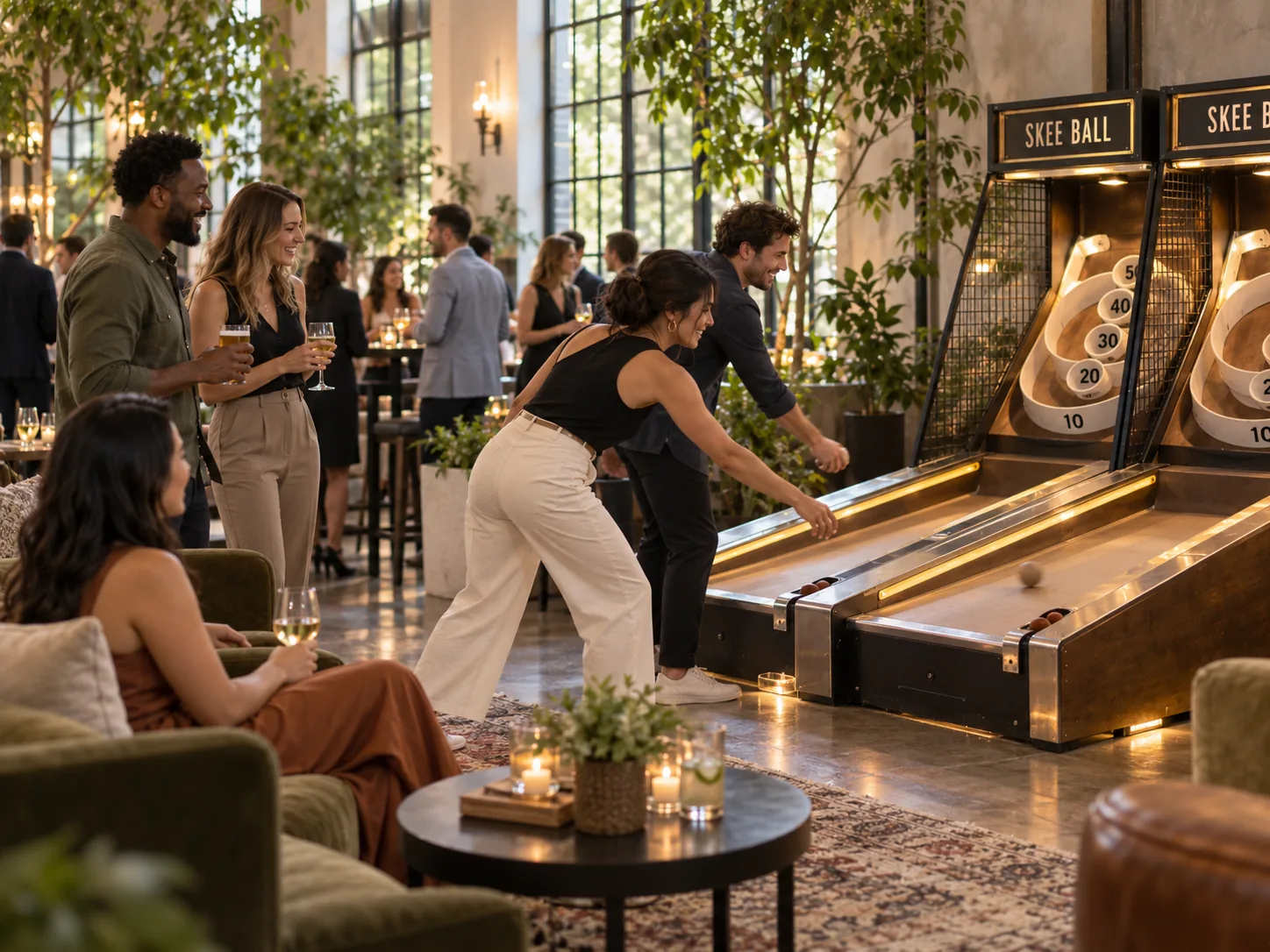
2. Give people something to do together.
We put so much pressure on conversation being the starting point of a connection. But sometimes it's a whole lot easier to get to know someone when you're doing something together.
I love the idea of incorporating a shared activity, especially something creative, noncompetitive, and a little unexpected.
Imagine inviting a small group to make pizzas together. Give them dough, toppings, and a challenge to create something that represents an interest they share.
Maybe two guests discover they both love traveling and decide to make an airplane out of pepperoni.
A little ridiculous? Sure. But fun!
They've learned something about each other, worked together, probably shared a few laughs, and now have a memory they can reference the next time they meet.
I'd take that over another round of elevator pitches.
There's even research exploring shared dining as a way to design better professional networking experiences.
It certainly doesn't have to be pizza. The opportunity is to give guests a reason to collaborate, get creative, or discover something they have in common. Something that makes conversation part of the experience rather than an assignment.

3. Help the connection continue after the event.
One great conversation doesn't automatically make a relationship. There needs to be an opportunity to pick up where you left off.
And that's where many events fall short. We bring people together, encourage them to connect, and then send them home with a thank-you email and a link to the photo gallery.
And that's it?
If building relationships was one of your event goals, I'd encourage you to have a 24–48-hour follow-up plan specifically focused on helping those relationships continue.
Who could benefit from an introduction? What conversations deserve a follow-up? Are there shared interests or potential collaborations worth exploring?
Better yet, make it part of the experience. Give guests a chance to identify conversations they'd like to continue or opt into introductions with others who share their interests. Then actually help make those connections happen.
And check back in a few weeks. Did anyone reconnect? Collaborate? Refer business? Did anything meaningful come from the event?
If connection was part of the goal, let's pay attention to what came from it.
4. Lead. By. Example.
If you're encouraging people to connect, you need to be someone who's actively connecting and making connections.
Greet your guests. Make thoughtful introductions. Invite someone into a conversation. Pay attention to who's standing alone and help them feel welcome.
And for the love of events, design your program so you actually have time to do this!
If you're emceeing every transition, troubleshooting vendor issues, and managing the entire run of show, when exactly are you supposed to host?
Build the right support around you, then be available to the people you invited.
And please don't disappear to chitchat with the other hosts and speakers while everyone else is left to figure everything out.
You brought these people together. Help them find each other.
Let's give people something better than a networking break.
I'm not suggesting we turn every business event into recess. There's absolutely a place for cocktail hours, open conversation, and a little awkward small talk.
But putting people in the same room isn't the same as helping them connect.
We can create experiences where people have something in common, something to participate in, and a reason to keep the conversation going. And we can do it without assigning everyone networking homework.
I'd much rather have someone leave an event with one person they're genuinely excited to see again than five business cards they'll never look at.
That's something worth designing for.
About the author
Madeline Narlock is the founder of Nightshift Planning Co., an Event + Experience Consultancy for businesses. She brings more than a decade of experience in events, hospitality, and experiential marketing.
Back to Ideas